Introduction
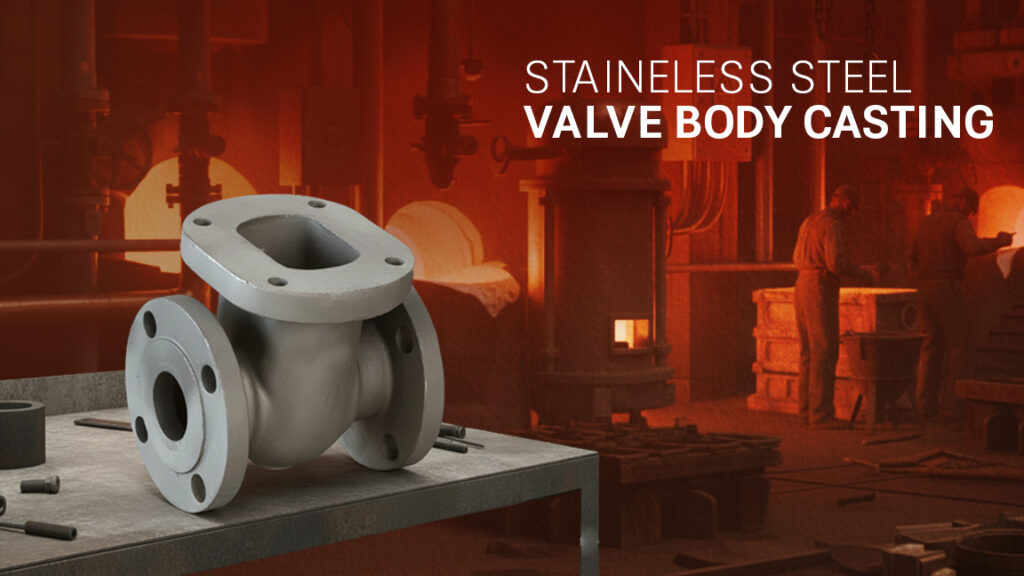
The manufacturing of a valve body is one of the most important processes in the Steel Valve Body Casting industry. The valve body is the central component of a valve, acting as the primary pressure-containing part that holds all internal mechanisms together. Its strength, integrity, and material quality directly determine the performance, lifespan, and safety of the valve. Because of this critical role, choosing the right manufacturing process especially the right casting method becomes fundamental. Among various approaches, the casting of valve body remains the most trusted and widely used method due to its ability to produce complex shapes, maintain strength, and deliver long-term performance in demanding industrial environments.
Casting has been a fundamental metalworking practice for centuries, but advancements in metallurgy, automation, mold materials, and quality control have transformed it into a highly precise and efficient technique. Unlike fabrication or machining from solid billets, casting allows manufacturers to create internal contours, chambers, flow paths, and wall thickness variations with ease. This makes it especially suitable for valve bodies, which require controlled internal geometry and strong structural design.
To understand the full importance of valve body casting, it is essential to begin with an overview of how the process works and what benefits it offers. Steel Valve Body are commonly made from materials such as carbon steel, alloy steel, stainless steel, ductile iron, manganese steel, and other high-performance alloys. The choice of metal depends on the end application whether the valve is used in high pressure, corrosive media, high temperature, abrasive environments, or general fluid handling systems.
Overview of Valve Body Casting
Casting of valve body refers to the process of forming the valve’s primary housing by pouring molten metal into a mold shaped according to the valve design. The mold may be made using sand, ceramic shell, resin-coated sand, or metal molds depending on the chosen casting method. After solidification, the casting is removed, cleaned, machined, and tested.
The purpose of casting is to produce a robust, pressure-resistant, and corrosion-resistant Steel valve body that can withstand harsh operating conditions. Since valve bodies often have complex designs with internal flow channels, casting is the most feasible and economical method to create them. Manufacturing a valve body from a solid block of metal would not only waste material but would also be extremely challenging to machine internally. Casting resolves these issues while offering high flexibility in design.

Key Features of a High-Quality Casting of Valve Body
A well-cast valve body must possess several essential characteristics to ensure reliability in real-world operations. These features include:
-
High tensile strength: The casting must withstand intense internal pressure and external stress without deforming or cracking. Proper heat treatment improves strength.
-
Dimensional accuracy: The internal and external dimensions must meet precise tolerance requirements to ensure proper valve operation and tight sealing.
-
Corrosion resistance: Depending on the application, materials like stainless steel, duplex steel, or alloy steel offer corrosion protection, especially for chemical or marine environments.
-
Smooth internal surfaces: Good casting processes create smoother internal passageways, reducing pressure loss and improving fluid flow.
-
Leak-proof construction: Casting produces a seamless structure that minimizes the risk of leakage and improves operational safety.
-
Shape complexity: Casting allows internal designs that cannot be achieved through machining alone. This is crucial for valves with intricate flow paths.
-
Temperature and pressure stability: A cast valve body maintains strength even in extremely hot or high-pressure applications such as boilers, steam systems, and power plants.
These features combine to make casting an ideal method for manufacturing durable, long-lasting valve bodies.
Advantages of Valve Body Casting
Casting offers significant advantages over other manufacturing techniques. These benefits extend to cost, design flexibility, performance, and material versatility.
1. Ability to Produce Complex Designs
Casting can easily create intricate internal cavities and shapes. This improves fluid flow efficiency and reduces machining needs.
2. Supports a Wide Range of Materials
From stainless steel to high-alloy steels, casting supports materials required for corrosive, high-temperature, and heavy-duty environments.
3. Cost-Effective Production Method
For medium to large-volume manufacturing, casting reduces material waste and machining costs, making it more economical.
4. Superior Strength and Durability
Heat treatment improves metallurgical properties, making cast valve bodies extremely durable for long-term usage.
5. Ideal for Large Components
Casting is the most practical method for large valve bodies used in heavy industries, which would be extremely difficult to machine otherwise.
6. Excellent Surface Finish (Investment Casting)
Precision casting processes offer high-quality surface finishes that reduce the need for additional polishing.
7. Design Flexibility and Customization
Improved mold technology allows manufacturers to quickly adapt designs and modify components without significant cost increase.
These advantages make casting the preferred method for Steel valve body manufacturing worldwide.
Disadvantages of Valve Body Casting
While casting has many strengths, it also has certain drawbacks that manufacturers and customers must consider.
1. Risk of Casting Defects
Porosity, shrinkage, cracks, and inclusions can occur if mold design, pouring temperature, or cooling is not controlled properly.
2. Longer Production Time
Pattern creation, mold preparation, and cooling take more time compared to machining from solid metal.
3. Higher Cost for Low-Volume Production
If only a few units are needed, the cost of making molds may not be justified.
4. Dimensional Variation (in Sand Casting)
Sand casting may result in slightly lower dimensional precision unless carefully controlled.
5. Requires Skilled Technicians and Quality Control
To avoid defects and ensure high strength, casting requires expert supervision and advanced inspection techniques.
Despite these disadvantages, technological advancements such as simulation software, automated pouring, and improved molds have significantly minimized casting challenges.
Differences Between Valve Body Casting Methods
Various casting methods are used in valve manufacturing. Each differs based on cost, precision, complexity, and application suitability.
-
Sand Casting vs Investment Casting
Sand casting is ideal for large and heavy valve bodies, while investment casting is better for smaller, complex, and high-accuracy valves.
-
Investment Casting vs Shell Mold Casting
Investment casting offers better surface finish and precision, but shell molding allows faster production with good dimensional accuracy.
-
Sand Casting vs Die Casting
Sand casting is used for steel valves, while die casting is mostly for lightweight non-ferrous metals like aluminum or brass.
-
Centrifugal Casting vs Static Casting
Centrifugal casting is used for cylindrical parts with superior density, while static casting is used for all general valve body shapes.
These differences play a major role in selecting the right manufacturing method depending on the industry’s requirements.
Which Casting Method Is Best for Valve Body Manufacturing?
Different applications demand different casting methods, but some techniques stand out based on performance, strength, and cost-effectiveness.
-
For heavy-duty industrial valves:
Sand casting with alloy or stainless steel is the most reliable option due to its strength and affordability.
-
For high-precision components:
Investment casting is the best choice because it offers excellent accuracy and smooth surfaces.
-
For medium-size valve bodies with consistent quality:
Shell mold casting balances precision and cost.
-
For lightweight valves:
Die casting is suitable when working with aluminum or zinc.
If the valve is meant for use in critical industries such as petrochemical plants, high-pressure steam systems, or corrosive environments, investment casting or high-grade sand casting with heat treatment usually provides the highest performance and safety.
Conclusion
The casting of valve body remains the most trusted and effective manufacturing method in the global valve industry. It offers unmatched design flexibility, high material strength, and excellent reliability even in harsh industrial conditions. Whether the requirement is for a large industrial valve or a precision-engineered control valve, the right casting method ensures superior performance, safety, and long-term durability.
Sand casting remains the best choice for heavy-duty and large-scale Steel Valve bodies, investment casting is ideal for precision and intricate designs, and shell mould casting provides a balance of quality and affordability. Understanding these differences allows industries to choose the perfect solution depending on their operational needs.
So, if you are interested to import best quality steel casting product from India, Get in touch with us.
FAQs
Q1. What is a steel valve body casting?
A steel valve body casting is the primary pressure-containing component of an industrial valve. It is manufactured by pouring molten steel into a mould to create a strong, durable body capable of handling high pressure, temperature, and corrosive media.
Q2. Which materials are commonly used for valve body castings?
Common materials include carbon steel, stainless steel grades such as CF8, CF8M, CF3, and CF3M, alloy steel, duplex stainless steel, and heat-resistant steel. The material is selected based on pressure, temperature, corrosion resistance, and service conditions.
Q3. What industries use steel valve body castings?
Steel valve body castings are widely used in oil and gas, petrochemical, power generation, water treatment, chemical processing, mining, marine, and general industrial applications.
Q4. How is the quality of a steel valve body casting ensured?
Quality is ensured through controlled melting, spectrometer chemical analysis, casting simulation, heat treatment, precision machining, dimensional inspection, non-destructive testing (NDT), pressure testing where applicable, and compliance with relevant industry standards.
Q5. Why choose Sumukh Steel Casting for valve body castings?
Sumukh Steel Casting manufactures high-quality valve body castings using advanced foundry technology, precision machining, rigorous quality control, and customized manufacturing to meet OEM and industrial application requirements.