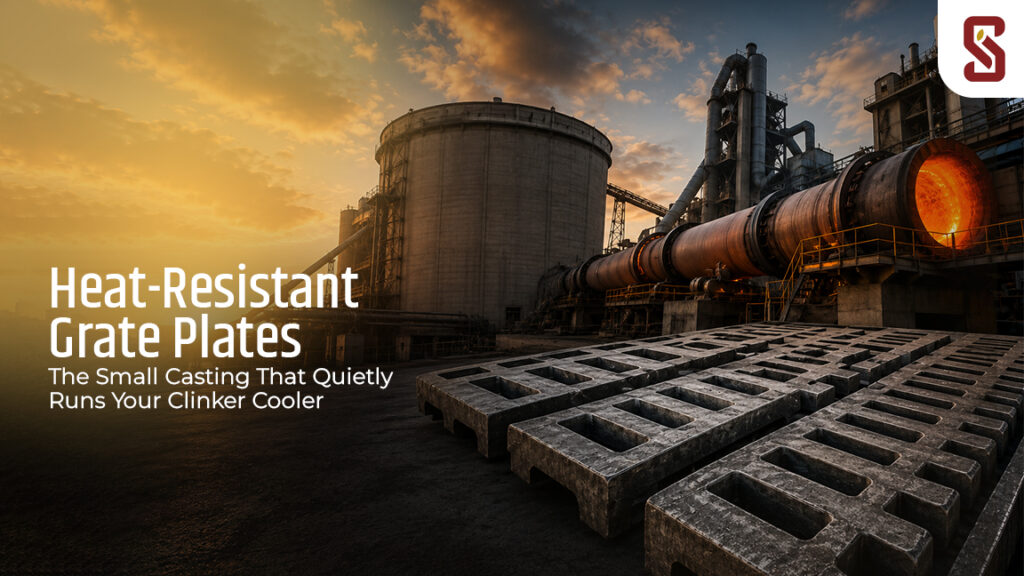
Walk through a cement plant, and nobody talks about grate plates. They talk about the kiln, the mill, the cooler as a unit — never the rows of castings doing the actual work inside it. But ask any cooler engineer where the trouble usually starts, and the answer comes back fast enough. As a foundry that pours heat-resistant grate plates, we see the failed ones come back, and the pattern is always the same: it’s rarely the cooler design that lets a plant down — it’s the metallurgy of the plates.
What the grate cooler is actually doing
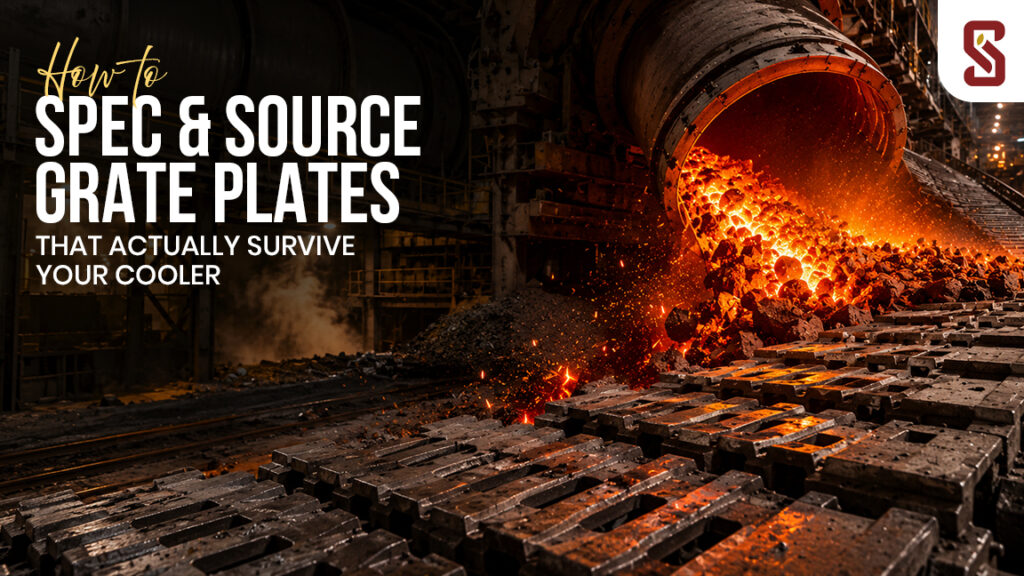
The grate cooler has three jobs to do at once. It has to quench scorching clinker coming off the kiln, march that material along through the cooling zone, and claw back as much heat as it can to feed the kiln and precalciner. The grate plates are where all three happen — they’re the floor the clinker lands on and the surface the cooling air passes through.
Clinker drops onto them straight from the kiln at temperatures north of 1,400 °C. The plates have to take that thermal punishment while letting air blow up through them, and it’s that exchange — hot clinker, cool air — that turns a glowing pile into something a mill can actually grind. Get it right and the cooler hums. Get the metal wrong and you’re chasing failures.
Why heat resistance is the whole game
A grate plate doesn’t see one condition — it sees three, depending on where it sits in the cooler:
| Cooler zone | Working temperature | What kills the plate |
| Hot zone (kiln drop) | Up to ~1,400 °C | Impact from falling clinker plus thermal shock from uneven heating |
| Intermediate zone | ~600–1,000 °C | Combined thermal cycling and mechanical load |
| Cold zone | Below ~600 °C | Abrasive wear as material is conveyed along |
In the hot zone especially, falling clinker hammers the plate mechanically while uneven heating works it thermally. Pick an under-specified alloy and the plates warp, crack or wear out early — which means unplanned shutdowns and a cooler that never quite hits its numbers. The trick is keeping the metal cool through good air distribution while choosing a grade that holds its shape and strength when it does get hot. That’s why a Cr-Ni austenitic heat-resistant steel — the HK40 family we pour — is the sensible default for the demanding positions.
Where good plates pay you back
None of this is abstract. When the plates are right, the savings show up on the plant’s monthly numbers.
Better heat recovery
A well-functioning grate cooler can return a large share of the clinker’s heat — commonly cited around the two-thirds mark on modern coolers — back into the process as secondary and tertiary air. That recovered heat is heat you don’t have to burn again during calcination.
Lower fuel bills
Because of that recovery, a high-efficiency cooler can meaningfully trim kiln fuel consumption. On a large plant that adds up to thousands of tonnes of coal a year that simply aren’t burned. Plates that hold their integrity longer are what keep that saving steady rather than seasonal.
Longer service life
A properly chosen heat-resistant grade resists oxidation, sulphur attack and the constant thermal-plus-mechanical pounding far better than a generic casting. That stretches the gap between change-outs and pulls maintenance cost down with it.
Better clinker
Rapid, even quenching at the grate doesn’t just cool the clinker — it improves it. Fast cooling limits crystal growth in the clinker minerals, which helps strength and grindability downstream. The plates aren’t just surviving the process; they’re shaping the product.
Costs that work out
Yes, a high-efficiency cooler draws a little more fan power. But the fuel saved dwarfs the extra electricity, and conversions of this kind typically pay for themselves inside a couple of years. The grate plates are a small line item with an outsized effect on that maths.
The metallurgy behind a plate that lasts
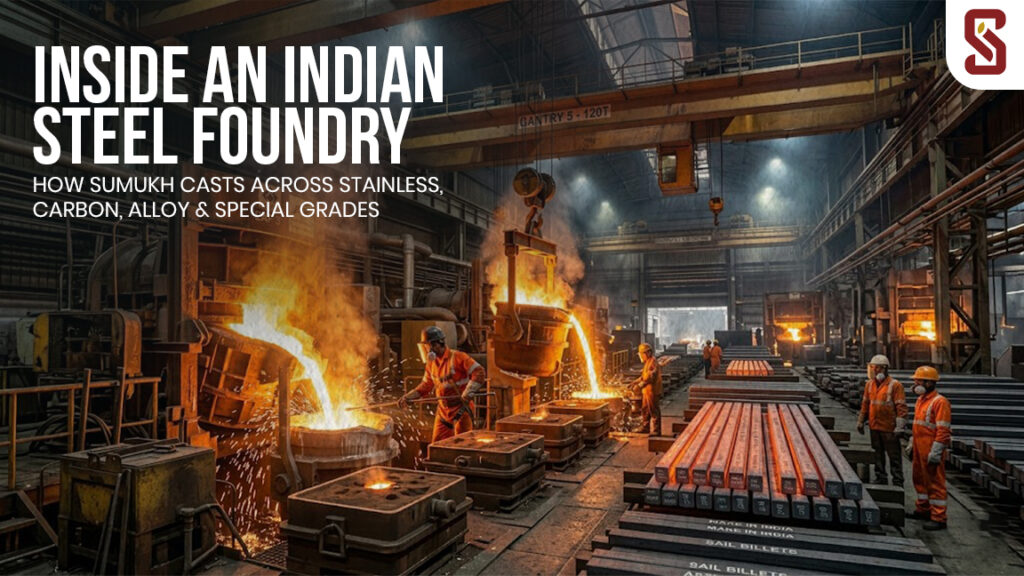
This is the part we actually control. As a steel casting manufacturer in India that pours carbon, alloy and heat-resistant grades, what we put into a good grate plate is deliberate:
- The right grade for the zone — Cr-Ni austenitic heat-resistant steel (HK40-type) for the hot positions, where oxidation resistance and high-temperature strength decide the plate’s life.
- Sound, controlled chemistry — every heat checked on our Bruker spectrometer before pouring, because a heat-resistant grade that’s off-chemistry isn’t heat-resistant.
- Geometry that breathes — a casting designed for even air distribution cools both the clinker and itself, which is half the battle against thermal fatigue.
- Extra metal where it’s hit — a thicker working face buys high-temperature wear resistance exactly where the clinker lands.
A word on maintenance
Even the best plate is a consumable in the end. Inspect them on a routine, change the worn ones before they drag the whole cooler’s efficiency down, and remember that wear is zone-specific — the hot positions and the cold positions don’t fail the same way, and they don’t always want the same grade. Matching material to position is where a foundry that understands the duty earns its keep.
In short
Grate plates look like a minor consumable and behave like an efficiency multiplier. Whether your cooler recovers its heat, sips fuel, makes good clinker and stays out of unplanned shutdown comes down, more than anyone admits, to the metal in those plates. Spec them properly and source them from a foundry that actually understands the grade, and they’ll quietly pay for themselves — which, for a small casting, is about the best review you can give.
Frequently Asked Questions
What temperature can heat-resistant grate plates take?
Cr-Ni austenitic heat-resistant grades such as HK40 are built for the hot zone of the cooler, where clinker arrives from the kiln above 1,400 °C. Holding strength and oxidation resistance at that heat is exactly what the grade is for.
How often do grate plates need replacing?
It depends on the zone and how the cooler is run — hot-zone plates wear faster than cold-zone ones. The honest answer is: inspect regularly and replace before a worn plate starts dragging down cooling efficiency. A properly specified grade simply stretches that interval.
Which material is best for grate plates?
For the demanding positions, a Cr-Ni austenitic heat-resistant steel like HK40 is the dependable choice — it resists oxidation, sulphur attack and the combined thermal and mechanical load. Cooler zones can use lighter grades; it’s not one-size-fits-all.
How exactly do good plates improve plant efficiency?
By cooling the clinker evenly, they let the cooler recover more heat back into the kiln as secondary and tertiary air — which cuts the fuel you have to burn during calcination. Stable, long-lived plates keep that saving consistent.
What are the warning signs a plate needs changing?
Watch for falling cooling efficiency, visible cracks or warping, patchy air distribution, clinker leaving the cooler hotter than it should, and obvious wear on the working face. Routine inspection catches all of these early.
Ready to stop losing efficiency to worn plates? Sumukh Steel Castings supplies heat-resistant grate plates poured to grade and built for the duty. Send us your cooler details for a customised quotation.
- Website: sumukhsteelcast.com
- Phone: +91 9260006666
- Email: dhruv@sumukhsteelcast.com
- Specialisation: Carbon, alloy and heat-resistant steel castings for cement plants