Introduction
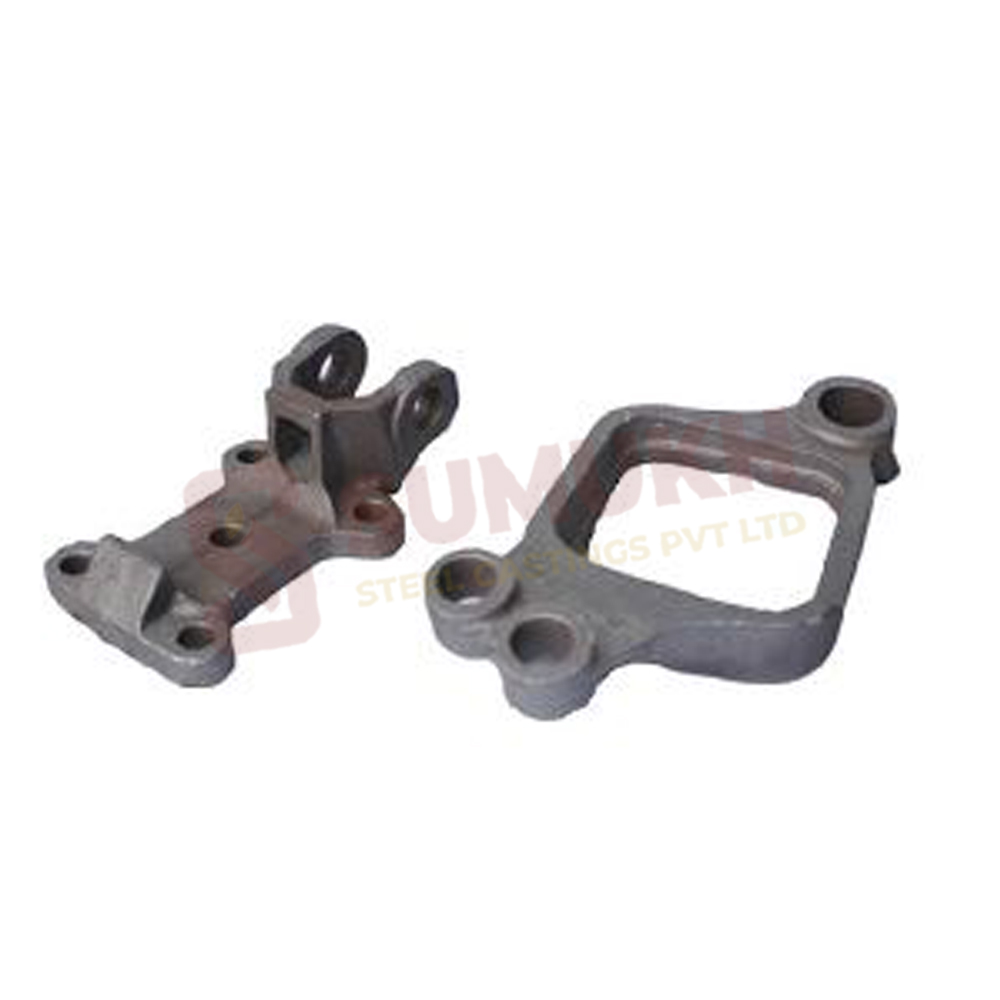
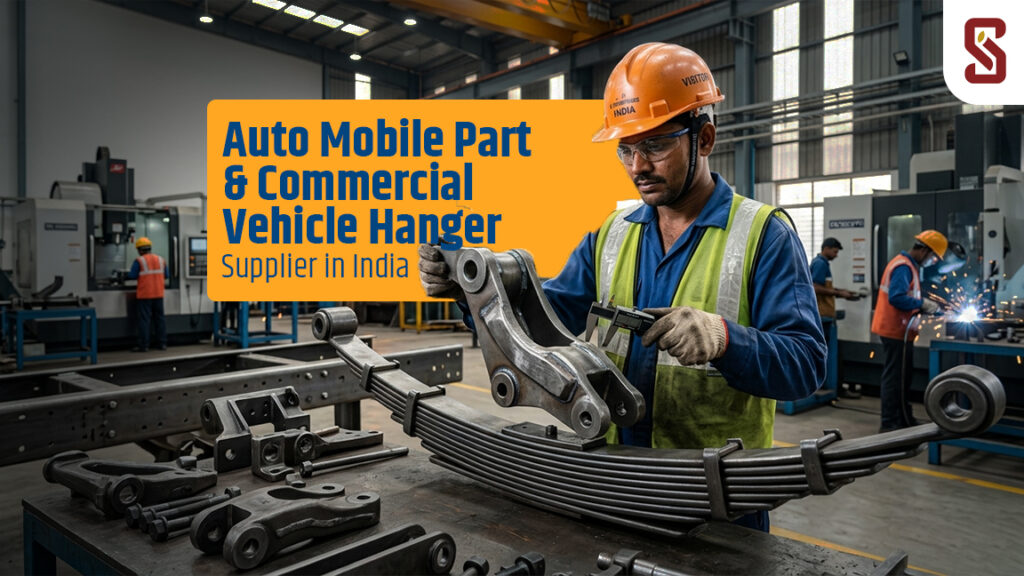
India’s commercial vehicle industry runs hard. Trucks, buses, and trailers cover enormous distances under heavy loads on roads that test every component, and the parts that hold their suspensions together have to be built for that punishment. The commercial vehicle hanger is one of those parts small, unglamorous, and absolutely critical to how a loaded vehicle behaves.
As an automobile part and commercial vehicle hanger supplier in India, Sumukh Steel Casting makes hanger components engineered for exactly these conditions. With our casting capability and in-house quality control, we supply both OEMs and the aftermarket with parts that hold up over the long haul.
What a Commercial Vehicle Hanger Actually Does
A hanger is a suspension mounting bracket. It connects the leaf springs and suspension assembly to the vehicle chassis, and in doing so it carries and transfers the loads that keep the vehicle stable. In service it has to:
- Support the weight of a fully loaded vehicle
- Absorb road shock and vibration
- Keep the suspension correctly aligned
- Contribute to ride stability and handling
Because all of that runs through a single bracket, the hanger has to be made from a material tough enough to take sustained mechanical stress without cracking or deforming. This is not a part where you cut corners on grade or process.
Why Casting Quality Matters Here
The quality of a hanger feeds straight into vehicle reliability. A weak or poorly made part wears early, throws the suspension out of alignment, drives up maintenance cost, and in the worst case becomes a safety problem. A well-made one does the opposite.
Good steel castings give a hanger the wear resistance and fatigue life it needs to stay in service for years rather than months. Sound design distributes the load properly so the part stays stable even when the vehicle is worked hard. Precise manufacturing keeps the suspension aligned and removes the risk of structural failure. And for a fleet operator, a reliable hanger simply means the vehicle stays on the road and earning, which is the whole point.
What Sumukh Brings to It
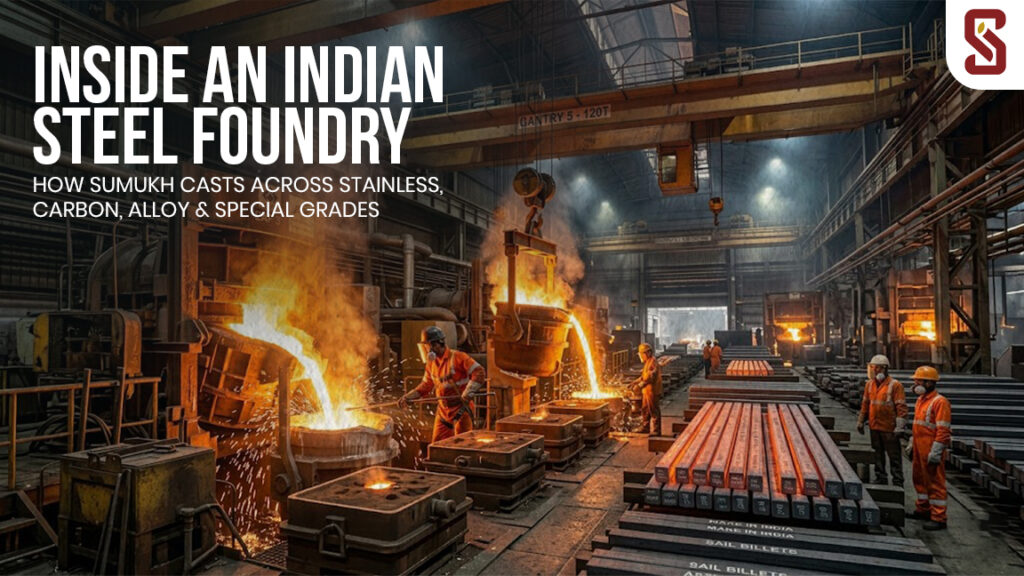
We specialize in steel castings for automotive, industrial, and engineering use, and the hanger is a part that plays to our strengths.
Every hanger is poured to a graded specification — typically a carbon or low-alloy steel chosen for the right balance of strength, toughness, and fatigue life — and cast to close dimensional accuracy so it fits the suspension and chassis it is designed for. We verify the chemistry on a spectrometer, develop the mechanical properties through controlled heat treatment, and put each batch through inspection for dimensional accuracy, mechanical properties, surface finish, and structural soundness before it ships.
Where a customer’s vehicle or suspension needs something specific, we build to it. Different applications call for different geometry, load capacity, and material, and we make hangers to the customer’s requirement rather than forcing a standard part to fit.
Where These Parts Are Used
Commercial vehicle hangers turn up across the transport and off-highway world:
- Heavy-duty trucks, where the suspension carries serious cargo loads while keeping the vehicle stable
- Buses and passenger vehicles, where suspension behaviour translates directly into ride comfort and safety
- Trailers, which depend on durable hanger assemblies to distribute load evenly
- Construction equipment, operating in conditions that demand robust suspension components
- Agricultural vehicles, working across rough terrain that punishes weak parts
Why Steel Castings Suit Automotive Work
Steel castings stay a preferred choice for structural automotive parts for good reasons: high load-bearing capacity, real toughness, strong fatigue resistance, the design freedom to form complex shapes, and cost-effective production of those shapes at volume. For a load-bearing bracket that has to last, those properties are exactly what the job calls for, and casting is the most sensible way to get them.
Where the Sector Is Going
As vehicles evolve, component makers are pushed toward parts that are lighter, stronger, and more precisely made, with more demand for customised solutions and tighter quality assurance built in. The suppliers that keep pace — improving materials and process while holding the fundamentals steady — are the ones that will keep supporting the industry as it grows.
Conclusion
Choosing the right commercial vehicle hanger supplier is not a minor procurement decision. The hanger is a critical suspension component, and it has to be strong, precise, and durable, because the safety and reliability of a loaded vehicle partly rest on it. With our experience in steel casting, our production capability, and a steady focus on quality, Sumukh Steel Casting supplies dependable hanger components to commercial vehicle makers and fleet operators across India — standard parts where that fits, and customised castings where it does not.
Looking for a reliable automobile part and commercial vehicle hanger supplier in India? Talk to Sumukh Steel Casting about your component requirement and we will work out a solution suited to your application.
FAQs
1. What is a commercial vehicle hanger?
It is a suspension mounting component that connects the leaf springs and suspension system to the vehicle chassis.
2. Why are steel castings preferred for vehicle hangers?
Because they combine strength, toughness, impact resistance, and load-bearing capacity, which is what a heavy-duty suspension bracket needs.
3. Which industries use commercial vehicle hangers?
Trucking and transport, construction, agriculture, and logistics all rely on them.
4. Does Sumukh Steel Casting provide customised hanger solutions?
Yes. We make hangers to specific vehicle and suspension requirements rather than only standard parts.
5. How do good hangers improve vehicle performance?
They keep the suspension stable and aligned, distribute load properly, reduce maintenance, and contribute to overall safety and reliability.