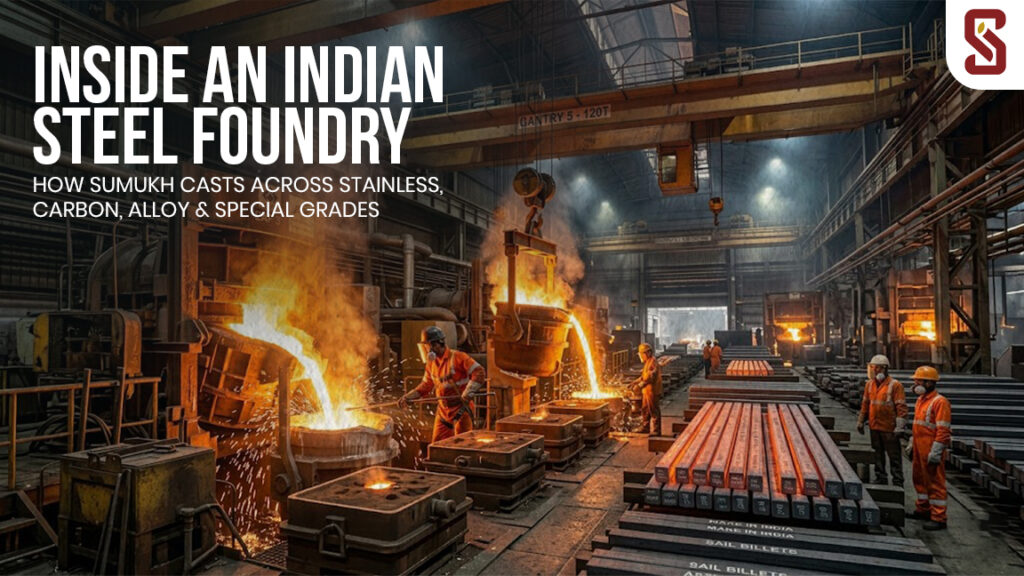
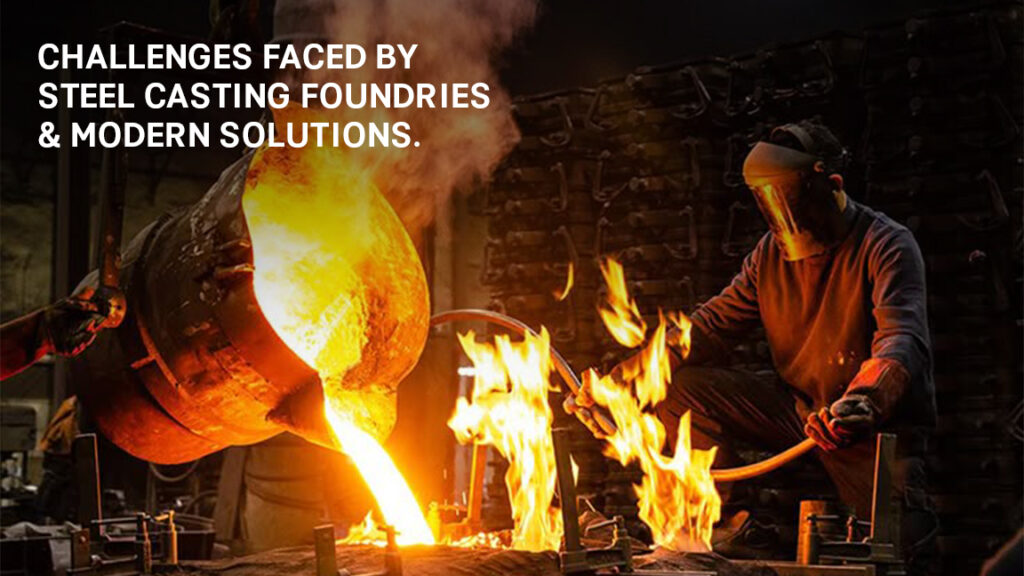
Running a steel foundry is a daily exercise in controlling things that do not want to be controlled molten metal at over 1,600 degrees, sand that has to hold a precise shape under that heat, chemistry that shifts with every charge, and an electricity bill that can swing the month’s profit on its own. The industry turns raw steel into parts that machines and vehicles cannot do without, but it does so against a long list of genuine difficulties. Here is an honest look at the hardest of those problems and the tools that are actually solving them, written from inside a working Steel foundry rather than from a textbook.
Getting the Metallurgy Right
Everything starts with the melt, and the melt is unforgiving. The final casting is only as good as the chemistry and temperature of the steel that went into it.
The recurring problems are contamination, composition drift, and temperature control. Impurities in the charge or picked up during melting form non-metallic inclusions that act as stress raisers and quietly cut the part’s strength and fatigue life. Hitting the exact composition for a given grade means controlling alloy additions tightly, because a small deviation can push the mechanical properties out of specification. And the bath temperature has to stay in a narrow band too cold and the metal will not fill, leaving misruns; too hot and you get grain growth, gas pickup, and mould erosion. Slag has to be skimmed and managed so it does not end up trapped in the part.
The answer is measurement, not guesswork. A spectrometer on the floor we run a Bruker Q4 lets us verify the chemistry of every heat before anyone pours, and disciplined charge-mix calculation gets the melt into the window in the first place. Modern induction furnaces give tighter temperature control and cleaner metal than older methods.
Casting Defects
Defects are the most visible and most expensive problem a foundry faces, and they take several forms. Shrinkage cavities form where solidifying metal is not fed properly. Gas porosity appears when dissolved or mould-generated gases get trapped during freezing. Hot tears crack the part while it is still hot, usually where shrinkage is restrained. Cold shuts and misruns happen when the metal fails to fill the cavity cleanly. Sand inclusions and mould erosion put sand where steel should be.
The single biggest advance against all of these has been casting simulation. Before we cut a pattern, we model mould filling and solidification in software AutoCAST in our case so we can see where shrinkage and hot spots will form and redesign the gating and feeding to prevent them. That moves defect-fighting from trial-and-error on the floor to analysis on the screen, which saves scrapped heats and shortened tempers. Good gating design, clean metal, and well-prepared moulds handle most of the rest.
Energy Cost and Environmental Load
Melting steel is energy-intensive by nature, and in India the cost and structure of that energy is a constant management problem. Furnaces and heat-treatment ovens draw heavily, and on a time-of-day tariff the difference between melting in a peak slot and an off-peak one is real money. Beyond cost, foundries generate spent sand, slag, dust, and fumes that all have to be handled responsibly.
The practical responses are efficiency and scheduling. Modern induction furnaces waste less energy than older melting routes; planning melts around the tariff structure to stay out of penalty zones cuts the bill without cutting output; and heat-recovery, sand reclamation, and proper dust collection reduce both waste and emissions. These are not abstract green gestures they show up directly on the cost sheet.
Cost Pressure and Competition
The market for castings is crowded and price-sensitive, which keeps constant pressure on margins. Scrap steel, ferroalloys, and refractory prices move around and drag production cost with them. Skilled people metallurgists, moulders, furnace operators are scarce and getting scarcer. Equipment and tooling need ongoing maintenance investment. And every defect that turns into rework or scrap burns energy and time twice, which is the fastest way to destroy profitability.
There is no single fix here, but the levers are clear: tight process control to keep scrap rates down, sensible automation of the most labour-intensive and hazardous tasks, and the kind of yield improvement that simulation and good methoding deliver. A foundry that controls its scrap rate controls a large part of its cost.
Holding Quality Consistently
Producing one good casting is not the challenge; producing the same good casting batch after batch is. Non-destructive testing radiography, ultrasonic, magnetic-particle, dye-penetrant is essential but takes time and money. Traceability from raw material through to final inspection has to be maintained for critical work. And holding dimensional accuracy on complex geometry, with shrinkage in play, needs careful pattern design.
The modern toolkit helps on every front: digital radiography is faster and easier to store and review than film, advanced ultrasonic methods characterize internal flaws more precisely, and systematic record-keeping increasingly digital keeps traceability intact.
Where the Industry Is Heading
The through-line in all of this is that the problems are old but the tools are new. Simulation designs out defects before the first pour. Spectrometry and modern melting control the metallurgy. Smarter scheduling and efficient furnaces tame the energy bill. Better NDT and record-keeping keep quality consistent. None of it removes the fundamental difficulty of working with molten steel, but together they make a Steel foundry far more capable and predictable than it was a generation ago.
Conclusion
Steel casting is a hard business, and pretending otherwise helps no one. The Steel foundries that thrive are the ones that meet each of these challenges head-on controlling the melt, designing out defects, managing energy and cost, and certifying quality using the technology now available to do it. At Sumukh Steel we have built our operation around exactly that combination of metallurgical control, simulation, and inspection, because in this industry capability is not a luxury. It is the price of staying in the game.
FAQs
1. What are the biggest challenges in steel casting foundries?
Common challenges include casting defects, high production costs, quality control issues, and material wastage.
2. How do modern technologies improve steel casting quality?
Advanced simulation software, automated molding, and precision inspection systems help reduce defects and improve accuracy.
3. Why is quality control important in steel casting?
Effective quality control ensures durable, defect-free castings that meet industry standards and customer requirements.
4. How can steel foundries reduce production costs?
Automation, process optimization, and efficient material management help lower operational expenses and increase productivity.
5. What is the future of steel casting foundries?
Smart manufacturing, AI-driven monitoring, and sustainable casting practices are shaping the future of steel casting industries.