A steel casting comes off the mould with its strength and its shape, but not yet with its precision. The casting process is brilliant at producing complex geometry and good metallurgical properties in one pour, but it cannot, on its own, hold the micron-level tolerances that a bearing seat or a mating flange demands. That final accuracy comes from machining. The two processes are not rivals casting gets the part close to net shape efficiently, and CNC machining takes it the rest of the way. Understanding how they work together is what separates a usable casting from a finished component.
What You Get Straight Off the Mould
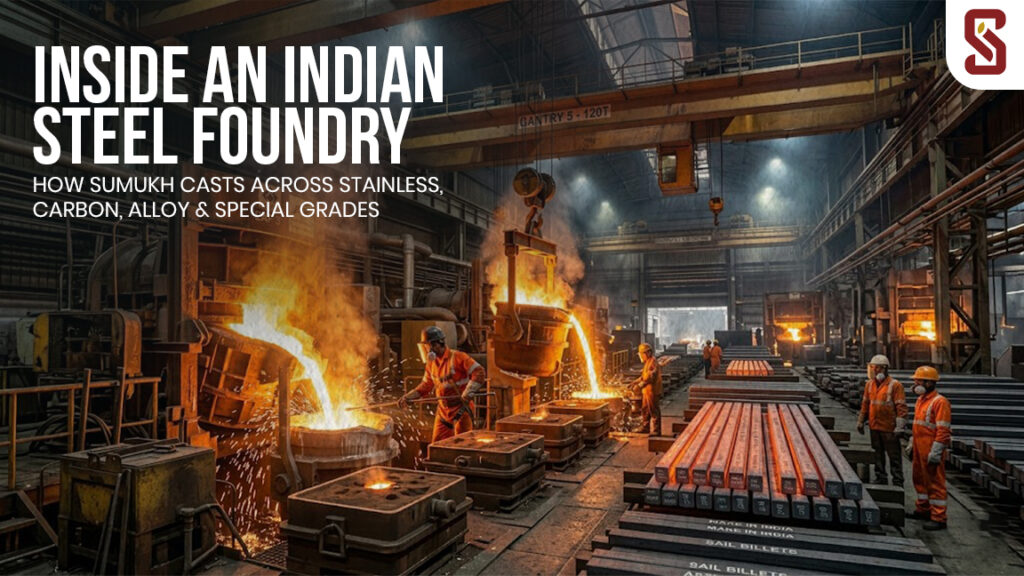
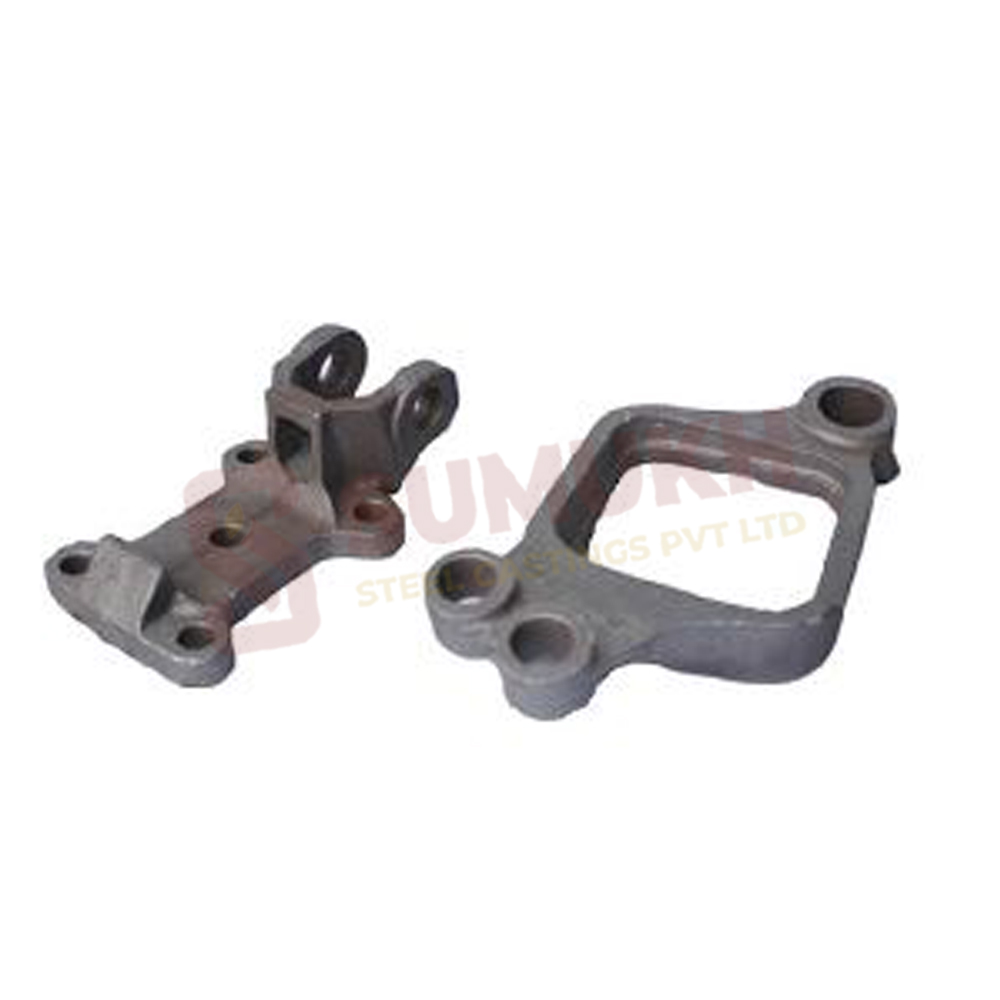
It helps to be clear about what a casting is and is not before machining. A steel casting is made by building a mould at our works, in shell, CO₂ silicate, no-bake, or lost-foam sand pouring molten steel to grade, letting it solidify, and then fettling away the gates and risers. What you have at that point is a part with the right alloy, the right grain structure after heat treatment, and the overall geometry of the design.
What you do not yet have is tight dimensional control on critical features. Cooling and shrinkage introduce small variations, the as-cast surface is relatively rough, and any draft angles needed to release the part from the mould are still present. For many uses that is perfectly adequate. For anything that has to fit precisely against another part, it is not and that is where the machine shop comes in.
Tolerances and Fit
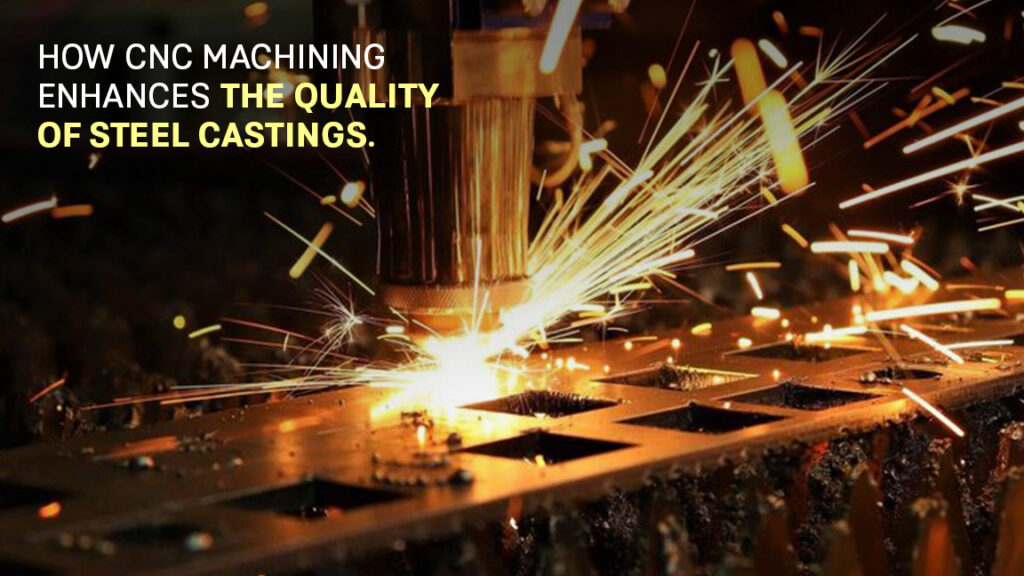
The single biggest thing machining adds is dimensional accuracy. A CNC mill, lathe, or grinder removes metal under computer control to bring bore diameters, face depths, and overall lengths to within a few microns of the drawing.
That precision does practical things. It lets a draft angle be cut back to a truly vertical wall where the design requires one. It makes parts genuinely interchangeable, so a casting from one batch drops into an assembly exactly like a casting from another, which is what keeps assembly lines and field servicing sane. And it turns a casting that is merely “about right” into one that mates with its neighbours without shims or hand-fitting.
Surface Finish Where It Counts
An as-cast surface carries the texture of the mould fine enough for a bracket, too rough for a sealing face or a bearing surface. Machining produces the smooth, controlled finish those features need.
A smoother surface reduces friction and wear on moving parts, gives sealing faces the flatness they need to actually seal, and provides a better base for paint, plating, or specialized coatings to adhere to. Not every surface on a casting needs this treatment the skill is in machining only the features that matter and leaving the rest as-cast, which keeps cost down.
Correcting What Casting Cannot Fully Control
Even with good practice and simulation, castings carry small variations, and heat treatment can introduce slight distortion. Machining is the corrective step. Because the casting is poured deliberately oversized on machined features we build in a machining allowance knowing the shrinkage behavior of each grade there is metal to remove to bring distorted or out-of-tolerance areas back to the drawing. The allowance is not waste; it is insurance, and the machine shop is where it gets cashed in.
Features the Mould Cannot Make Cleanly
Casting forms overall shape well, but there are limits to what a mould can hold for very fine features. Small-diameter holes, threaded holes, and precise internal passages are difficult to cast cleanly and far easier to drill, tap, and bore afterwards. Certain undercuts and internal geometries that would complicate mould design are simpler to machine into a solidified part. Part numbers, logos, and fine identifying marks are cleaner engraved than cast. In each case, casting does the bulk of the work and machining adds the precise detail on top.
A Quieter Benefit: Better Performance
Machining can also improve how a part performs. Cutting away the outermost skin can remove minor surface porosity or a decarburized layer, exposing sounder material underneath. Creating smooth radii and clean transitions removes the sharp corners that act as stress raisers, which improves fatigue life. And for rotating parts, controlled material removal balances the component and cuts vibration. None of these are the headline reason to machine a casting, but they are real gains that come along with it.
Why the Combination Beats Either Alone
The reason foundries and machine shops work hand in glove is simple economics and capability. Casting is the cheapest way to produce a complex shape in volume with the right material properties. Starting machining from a near-net-shape casting rather than carving the whole part out of solid bar means far less metal to remove, less tool wear, and lower machining cost. You get the best of both: casting for form and metallurgy, machining for precision and finish. At Sumukh Steel we supply parts both ways as-cast where that is what the customer needs, and fully machined to drawing where it is not.
Conclusion
CNC machining does not compete with casting; it completes it. By bringing tight tolerances, controlled surface finish, precise features, and corrected geometry to a casting that already has the right shape and metallurgy, machining turns raw castings into precision components fit for the most demanding service. The most reliable way to get there is to design the casting and its machining together from the start which is the conversation worth having with your foundry before the pattern is even cut.
FAQs
1. How does CNC machining improve steel casting quality?
CNC machining delivers precise dimensions, smooth finishes, and tighter tolerances for high-quality steel castings.
2. Why is CNC machining important for steel casting manufacturers?
It enhances accuracy, reduces defects, and ensures consistent production for industrial applications.
3. Can CNC machining increase the durability of steel castings?
Yes, precise machining improves component fit, performance, and overall service life.
4. What industries benefit from CNC-machined steel castings?
Automotive, aerospace, mining, pumps, valves, construction, and heavy engineering industries benefit greatly.
5. Does CNC machining reduce steel casting production errors?
Yes, automated CNC processes minimize human errors and improve manufacturing efficiency.