Steel Castings Manufacturing in India has seen tremendous evolution through time. Initially, machine makers from India preferred importing castings in crucial applications, citing issues relating to consistency in quality, unreliable metallurgy, and lack of proper certification facilities. This trend is a thing of the past today. With current advances in technology and processes, foundries in India have the capability of producing high-quality steel castings that conform to global ASTM and DIN specifications. The capability is enhanced further with the availability of state-of-the-art chemical analysis equipment using spectrometers, extensive non-destructive testing (NDT), and stringent quality control measures. This way, local production of castings becomes more cost-effective than importing them.
Steel casting rarely gets named in the headlines, but it sits at the base of almost everything the programmed is trying to build. You cannot make a tractor, a truck, a pump, a defense vehicle, or a piece of mining equipment without castings somewhere inside it. Strengthen the foundries, and you strengthen the entire chain above them.
What Make-in-India Is Trying to Do
The intent of the programmed is straight forward: make more of what India consumes inside India. In practical terms that means building domestic manufacturing capacity, cutting dependence on imports for critical components, and making Indian-made products competitive enough to export. None of that works without strong base industries, and steel casting is one of the most basic of all it is where raw metal first becomes an engineered part.
Where Castings Fit in the Chain
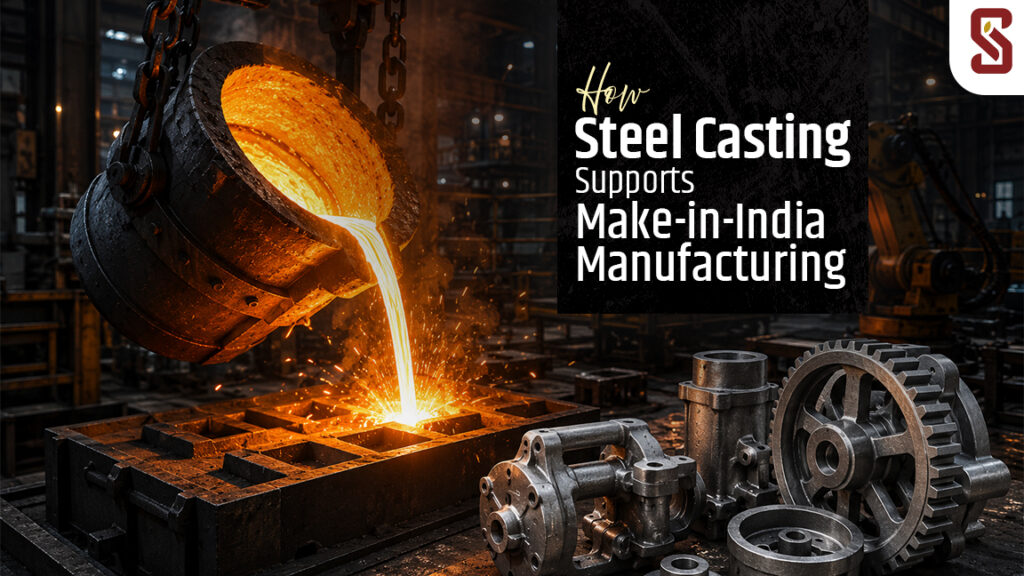
Steel casting takes molten steel and gives it a near-final shape in a single step. That is its quiet advantage. A complex, load-bearing part that would be expensive or impossible to fabricate by welding or to machine from solid can be poured close to net shape and then finished. For a manufacturer trying to localize, the foundry is often the part of the supply chain that is hardest to replace with an import substitute, which is exactly why building it up matters.
The sectors that depend on this are the same ones Make-in-India targets: automotive and commercial vehicles, construction and infrastructure, pumps and valves, power generation, mining, and defense. A capable local casting base feeds all of them at once.
The Real Change: Quality Caught Up
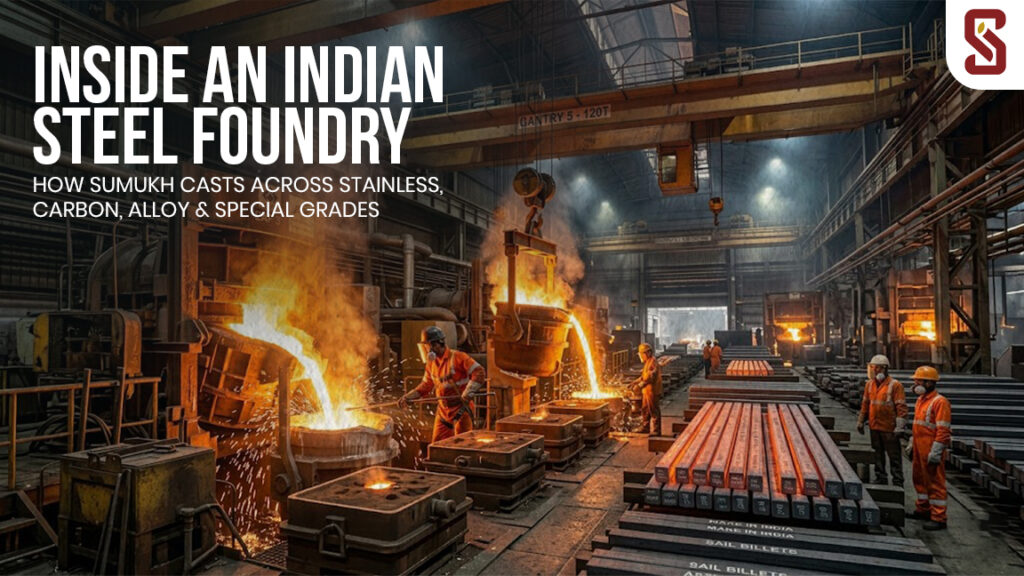
The reason import substitution is now credible comes down to capability, not slogans. The better Indian foundries have invested in the things that used to be the weak link:
- Metallurgical control — spectrometers on the shop floor so chemistry is verified on every heat, not assumed
- Process discipline — induction melting, controlled heat treatment, and casting simulation to design out defects before pouring
- Inspection — radiography, ultrasonic, magnetic-particle, and dye-penetrant testing to certify integrity
- Standards — pouring routinely to ASTM, IS, DIN, and customer-specific specifications
Once a foundry can do all of that consistently, an OEM has no metallurgical reason to import. The casting it gets locally meets the same drawing, and it gets it with a shorter lead time and without foreign-exchange exposure.
Automotive and Commercial Vehicles
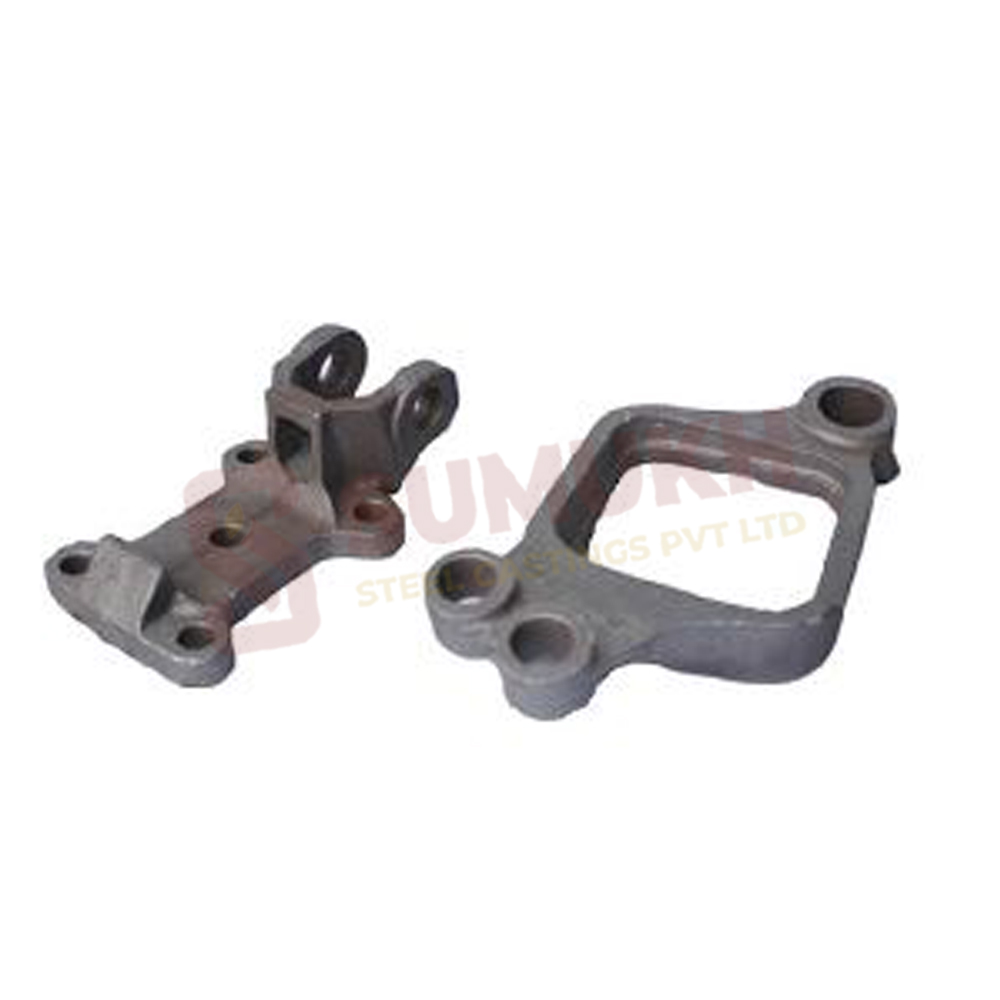
The vehicle industry is one of the largest consumers of steel castings in the country, and it is where localization has moved fastest. Suspension components, leaf-spring hangers, brackets, and structural mounts are all cast parts that have to survive heavy loads on rough roads for years. Commercial vehicles are especially demanding a truck running fully loaded over Indian highways will punish any part that is even slightly under-specified. Castings made to the right low-alloy or carbon grade give the strength and fatigue life these parts need, and pouring them domestically lets vehicle makers hit their localization targets without compromising on quality.
Infrastructure, Power, and Heavy Industry
India’s build-out of roads, railways, ports, and power capacity runs on heavy castings structural supports, large brackets, machine bases, and parts for power and process equipment. These are big, often intricate, and have to be reliable. Making them locally shortens project timelines and removes the dependence on overseas suppliers that used to bottleneck large projects.
The Defense Angle
Defense is where local casting capability stops being an economic question and becomes a strategic one. You cannot build self-reliant defense manufacturing on imported critical components. Domestic foundries that can pour to defense specifications and pass the associated inspection regimes are a direct enabler of the indigenous-defense push which is precisely the kind of work that demonstrates how far Indian casting quality has come.
Sustainability Is Part of the Story
The newer pressure on foundries is environmental, and the better ones are responding: more efficient induction furnaces, scrap recycling, sand reclamation, and tighter control of energy use. This is not separate from Make-in-India exporters increasingly have to meet environmental expectations to sell abroad, so cleaner foundries are more competitive foundries.
Why the Choice of Foundry Still Matters
A strong local casting base only helps if buyers actually work with foundries that hold the line on quality, deliver on time, support the engineering, and take customization seriously. The programmer’s success depends less on the number of foundries than on how many of them are genuinely capable. Choosing the right partner is what turns the idea of import substitution into a part that actually fits and lasts.
Sumukh Steel Castings and Local Manufacturing
This is the gap Sumukh Steel works to fill. From Kolhapur, we supply graded steel castings to automotive, commercial-vehicle, and industrial OEMs, poured to international standards and certified with in-house spectrometry, mechanical testing, and NDT. Every part that replaces an import is one less component an Indian manufacturer has to source from abroad and that, multiplied across hundreds of foundries, is what self-reliant manufacturing actually looks like on the ground.
Conclusion
Steel casting is one of the unglamorous foundations Make-in-India is built on. By making it possible to produce strong, certified, complex parts inside the country, capable foundries cut import dependence, support employment, and feed the sectors the programmed cares most about. As Indian casting quality continues to close the gap with the best in the world, the foundry floor will keep doing its quiet part in making Indian manufacturing genuinely self-reliant.
FAQs
1. Why is steel casting important for Make-in-India manufacturing?
Steel casting enables the production of high-strength industrial components locally, reducing import dependency and supporting domestic manufacturing growth.
2. Which industries benefit most from steel casting in India?
Industries such as automotive, railways, defense, mining, construction, and power generation rely heavily on steel casting components.
3. How does steel casting improve manufacturing efficiency?
Steel casting allows complex parts to be produced with precision, reducing machining time, material waste, and overall production costs.
4. What are the advantages of sourcing steel castings from Indian manufacturers?
Indian steel casting manufacturers offer cost-effective solutions, faster delivery, quality standards, and customized casting capabilities.
5. How does steel casting contribute to India’s industrial growth?
Steel casting strengthens local supply chains, creates employment opportunities, and supports the Make-in-India initiative by boosting domestic production.